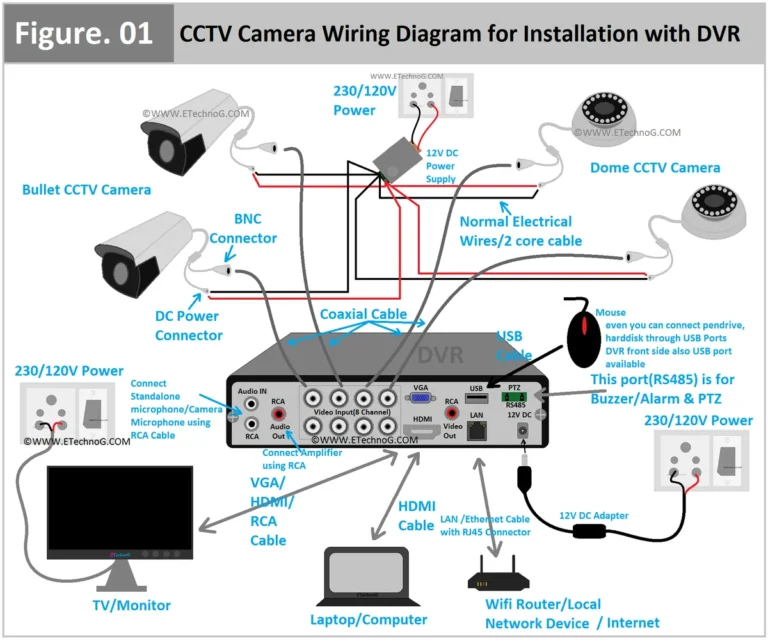
How Far Can CCTV Cameras Record?
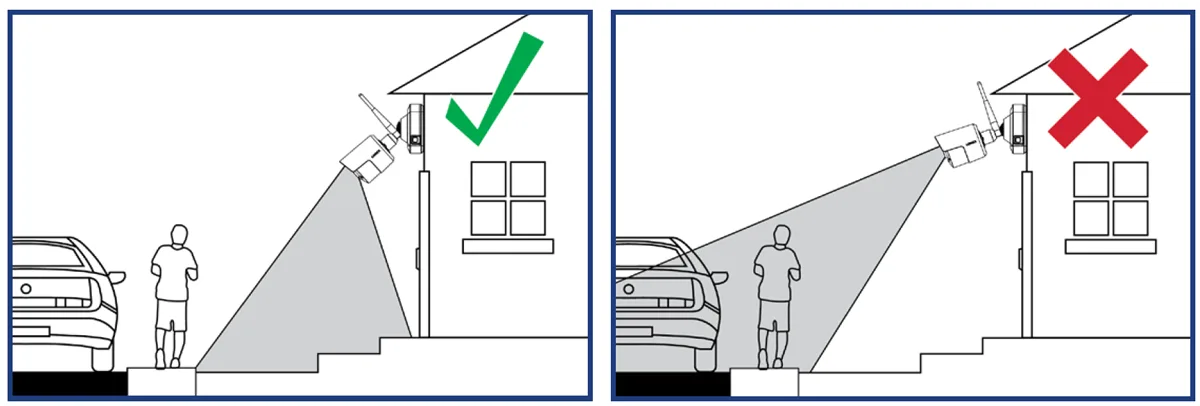
Image source: Bing (Web (fair-use with source credit))
So, you're wondering how far those CCTV cameras can "see," right? It's a question that pops up a lot, and honestly, there's no single, simple answer. It's not like buying a pair of binoculars where you just pick a magnification.
With CCTV, it's a whole mix of things that decide how far you can get a clear, usable image.
Think of it like this: you wouldn't ask "how far can a car drive?" without knowing what kind of car it is, what kind of road it's on, and how much fuel it has. CCTV recording distance is pretty much the same, it depends on the gear, the environment, and what you're actually trying to see.
Quick Answer
CCTV cameras can record effectively anywhere from 10 feet to over 200 feet. The actual distance depends on resolution, lens type, lighting, and the size of the object being viewed. Higher resolution and longer focal length lenses increase reach.
Night vision effectiveness is limited by IR range.
What "Recording Distance" Actually Means for CCTV Cameras
When we talk about how far a CCTV camera can "record," we're not just talking about the signal reaching a recorder. We're really talking about the quality and usefulness of the video footage at a given distance. It’s about being able to see enough detail to be meaningful for security purposes.
Think of it as three levels:
- Detection: The camera can sense something is there. This is the furthest reach, but you won't know what it is.
- Identification: The camera can show enough detail to identify a person or vehicle type (e.g., "it's a man," "it's a car").
- Recognition: The camera can capture fine details, like a face, a license plate, or text on clothing. This requires the closest distances or the most advanced cameras.
So, a camera might detect motion at 300 feet, but only identify a person at 50 feet, and recognize their face at 15 feet.
The Key Factors That Decide How Far a Camera Sees
Several technical aspects work together to determine a CCTV camera's effective recording distance. It's a balancing act between different components and environmental conditions.
Resolution: Seeing Detail Far Away
Resolution is one of the most crucial factors. It tells you how many pixels make up the image. Higher resolution means more pixels, which translates to a sharper, more detailed image.
- Lower Resolution (e.g., 720p): These cameras have fewer pixels. While they can cover a wide area, objects at a distance will appear small and less detailed. You might detect movement but struggle to identify individuals.
- Higher Resolution (e.g., 1080p, 4MP, 4K): With significantly more pixels, these cameras capture much finer details. This allows you to identify people or objects from further away. A 4K camera, for instance, has 8 times the pixels of a 1080p camera, offering a substantial increase in clarity and detail at a distance.
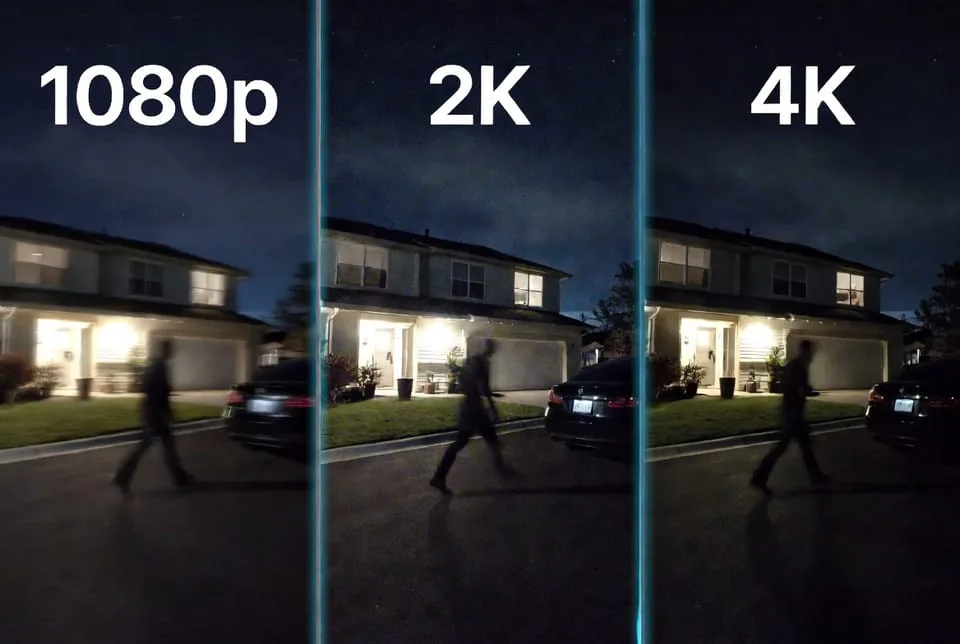
Image source: Bing (Web (fair-use with source credit))
This increased detail is what allows higher-resolution cameras to achieve greater identification distances. For effective recording and identification at greater distances, always opt for the highest resolution your budget and system can support.
Lenses: The Zoom Power of Your Camera
The lens is the "eye" of the camera, and its type, specifically its focal length, dramatically impacts how far the camera can "see" and what details it can capture. Lenses are typically measured in millimeters (mm).
- Wide-Angle Lenses (e.g., 2.8mm, 4mm): These have a short focal length. They offer a very wide field of view, perfect for covering large areas like yards or parking lots with a single camera. However, they magnify distant objects very little, meaning details will be small and harder to discern from afar.
- Telephoto Lenses (e.g., 8mm, 12mm, 25mm+): These have a long focal length. They provide a much narrower field of view but significantly magnify distant objects. This is what you need if your goal is to see and identify details from a considerable distance.
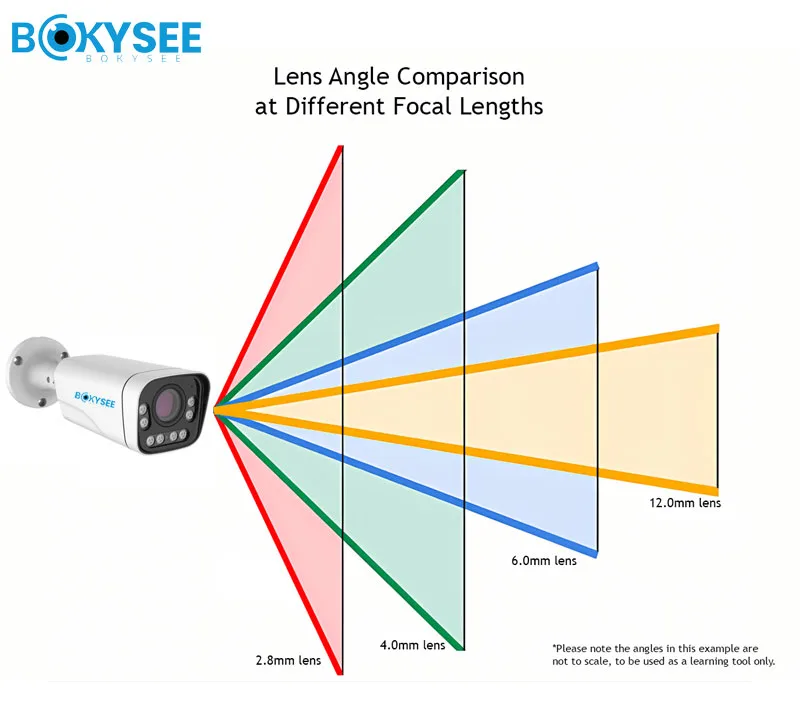
Image source: Bing (Web (fair-use with source credit))
For example, a camera with a 2.8mm lens might cover 100 degrees horizontally, while a 12mm lens might cover only 30 degrees. If you need to monitor a long driveway or a distant gate, a longer focal length lens is essential. Many modern IP cameras offer varifocal lenses, allowing you to adjust the focal length during installation to fine-tune the field of view and zoom.
If you're struggling with clarity over distance, check your camera's focal length and consider if an adjustment or a different lens is needed.
Low-Light Performance & IR Range
Seeing clearly in the dark is a major challenge for any camera. Low-light performance is how well a camera can capture usable images in dim conditions, often measured in lux. The lower the lux rating a camera can handle, the better its low-light capability.
However, for true darkness, most security cameras rely on infrared (IR) illuminators. These are LEDs that emit infrared light, which is invisible to the human eye but detectable by the camera's sensor. The IR range specifies how far these illuminators can project light.
- Typical IR Ranges: These can vary greatly, from 20-30 feet for basic indoor cameras to over 100 feet for specialized outdoor units.
- Limitations: The stated IR range is the maximum distance at which the camera can illuminate a scene. The effective identification distance will be less, depending on the camera's sensitivity and the object's reflectivity. Walls or obstructions can also reflect IR light, causing "hot spots" or glare that can blind the camera.
If you're relying on night vision, the IR range is a critical specification. A camera might boast a 1080p resolution, but if its IR range is only 20 feet, it won't be useful for monitoring anything further away in the dark.
Environmental Conditions
The weather and atmosphere play a significant role in how far your CCTV camera can effectively record. What looks clear on a sunny afternoon can become a blurry mess when it's raining, foggy, or dusty.
- Rain and Fog: These conditions scatter light, reducing visibility and making it harder for the camera to capture sharp images. Details can be washed out, significantly reducing the identification distance.
- Dust and Haze: Airborne particles can also diffuse light and obscure distant objects, similar to fog.
- Temperature Extremes: While less direct, extreme heat can cause atmospheric distortion (heat haze), and extreme cold can affect camera electronics, potentially impacting performance.
For optimal performance, especially for long-distance monitoring, consider cameras designed for rugged outdoor use and be aware that performance will degrade in adverse weather. If you've ever noticed your camera's image become hazy during a humid day, that's atmospheric distortion at play. It’s one of the reasons why keeping your camera lens clean is also vital; dirt and grime can act like a constant, low-level fog.
Matching Camera Reach to Your Needs: Practical Distances
Understanding the technical specs is one thing, but how does that translate into real-world usability? The "distance" you need your camera to record effectively depends entirely on what you want to monitor. A camera's capability is only relevant if it meets your specific security goals.
Here’s a breakdown of typical needs and the distances they generally require:
For Your Home: Entryways and Driveways
For most residential security, the primary concerns are the front door, back door, garage, and driveway.
- Front Door/Entryway: You primarily need to identify visitors, delivery people, or any unexpected activity right at your doorstep. An effective identification distance of 10-20 feet is usually sufficient here. A standard indoor or small outdoor bullet camera with a wide-angle lens often works well.
- Driveway: Monitoring your driveway might involve identifying unknown vehicles or people approaching your home. This usually requires a bit more reach, perhaps 30-60 feet, to get a clear shot of a car's make or a person's general build. A wider-angle outdoor camera with decent resolution is a good starting point.
- Yard/Perimeter: If you want to monitor a larger yard or the perimeter of your property, you might need a camera that can cover 50-100 feet. This could be for detecting when someone enters your yard or approaches a specific area.
For home use, you generally don't need to identify faces from hundreds of feet away. What you need is enough clarity to see who is there and what they are doing near your property's key access points. If you find yourself struggling with identifying individuals on your driveway, you might be experiencing video lag; you can explore solutions at how to fix security camera video lag.
For Businesses: Parking Lots and Perimeter
Businesses often have broader security needs, requiring cameras that can monitor larger areas and identify potential threats from much further away.
- Parking Lots: Businesses often need to monitor entire parking lots to deter theft, vandalism, or unauthorized access. This can require cameras capable of covering 50-150 feet or more. The goal is often to identify vehicles, detect loitering, or catch the license plate number of a suspect vehicle. Cameras with higher resolution and longer focal length lenses are essential here. If you're noticing poor performance, consider how to improve security camera WiFi signal if it's a wireless setup.
- Building Perimeter: Securing the exterior of a commercial building involves monitoring entry points, loading docks, and the general perimeter. Depending on the size of the property, this could require cameras with ranges of 100-200 feet or even more. For very large areas or specific critical points, specialized PTZ cameras with powerful zoom capabilities become necessary to achieve effective recognition at extreme distances.
- License Plate Recognition (LPR): For businesses that need to automatically capture license plates (like for access control or security logs), specialized LPR cameras are designed for this specific task. They typically operate effectively within a range of 30-60 feet and are optimized to capture the detail needed for plate identification, often at high speeds. These are different from general surveillance cameras and are tuned for very specific object recognition.
If you're seeing blurry images or motion is inconsistent, it might be due to motion detection issues. You can troubleshoot this by checking how to fix security camera motion detection.
Common Mistakes That Limit Your CCTV's Recording Distance
Even with the best equipment, you can unintentionally limit your CCTV cameras' effective recording distance. Understanding these common pitfalls is key to ensuring your system provides the clarity you need.
One frequent mistake is improper camera placement. Mounting a camera too low can lead to obscured views by passing vehicles or pedestrians, reducing the usable distance. Conversely, mounting too high might make fine detail recognition impossible, even if the camera technically covers a wide area.
Always consider the viewing angle and any potential obstructions at different distances.
Another oversight is neglecting environmental factors. Forgetting that fog, heavy rain, or even direct sunlight glare can drastically reduce clarity means you might be surprised by poor performance. Manufacturers often provide ideal condition specs, but real-world use involves variables that can impact the footage.
If you experience intermittent image quality issues, you might want to check why is my security camera blurry.
Expert Tips for Maximizing Your Camera's Effective Range
To get the most out of your CCTV system and ensure you can capture useful footage at the greatest possible distance, consider these expert recommendations. Planning and proper setup are crucial.
First, always match the camera's lens to its intended purpose and location. If you need to identify individuals or vehicles at a distance, choose a camera with a longer focal length (e.g., 12mm or more) rather than a wide-angle lens. For example, a 12mm lens on a 4MP camera can provide clear identification of faces at around 50 feet, whereas a 2.8mm lens might only offer basic detection at that same distance.
Second, prioritize cameras with excellent low-light performance and a sufficient IR range for your environment. If you’re monitoring a dark area, an IR range of 100 feet or more might be necessary. Remember that actual effective night vision distance is often less than the stated IR range due to light dispersion and reflectivity.
For optimal night clarity, consider placing supplemental IR illuminators if the built-in ones are insufficient. To ensure your system is always ready, learn how to update security camera firmware regularly for performance improvements and bug fixes.
Finally, take advantage of advanced camera features like Digital Detail Enhancement (DDE) or Wide Dynamic Range (WDR) if available. These technologies help to improve image clarity in challenging lighting conditions, such as scenes with bright sunlight and deep shadows. While these don't extend the physical range of the lens, they improve the quality of the image captured at a given distance, making identification more reliable.
Frequently Asked Questions About CCTV Recording Distance
How far can a standard outdoor CCTV camera record?
A typical outdoor bullet camera, with decent resolution (like 1080p or 4MP) and a moderate focal length lens, can effectively record for identification purposes at distances of about 30 to 100 feet. This range can be extended with telephoto lenses or higher resolutions, but clarity will decrease beyond optimal distances.
Does resolution affect how far a camera can record?
Yes, significantly. Higher resolution cameras, such as 4K units, capture many more pixels per square foot. This means that even distant objects retain more detail, allowing for identification and recognition at greater ranges compared to lower resolution cameras like 720p.
What is the effective range of night vision on CCTV cameras?
The effective range of night vision on CCTV cameras is determined by their Infrared (IR) illuminator range. This can vary from as little as 20 feet for basic cameras to over 100 feet for specialized models. However, the actual distance at which you can clearly identify objects in the dark is usually less than the stated IR range due to light scattering and reflectivity.
Can environmental factors reduce my camera's recording distance?
Absolutely. Heavy rain, fog, dust, snow, and even heat haze can scatter light and obscure details, significantly reducing the effective recording distance and clarity of any CCTV camera. Performance can also be impacted by how the camera's lens handles extreme temperatures or direct sunlight glare.
How do I choose a camera for long-distance surveillance?
For long-distance surveillance, you'll want a camera with a high resolution (4K is ideal) and a lens with a long focal length (12mm or higher). Cameras with advanced low-light performance and a substantial IR range are also crucial if you need coverage at night. PTZ (Pan-Tilt-Zoom) cameras with powerful optical zoom are best for very long distances.