How Far Can a Security Camera See
Wondering how far a security camera's "eye" can reach is a common question, and the truth is, there's no single, simple answer. It’s a blend of technical specs and real-world conditions that determine what you can actually observe. Think of it like asking how far you can hear, it depends on the volume of the sound and the obstacles in between.
In our research, we found that manufacturer specifications often cite detection ranges, but these can differ greatly from what's achievable for clear identification. For instance, a camera might claim a 100-foot detection range, but that doesn't mean you'll see a person's face clearly at that distance; it often refers to simply spotting movement. As of 2026, understanding the interplay between resolution, lens, and environmental factors remains key.
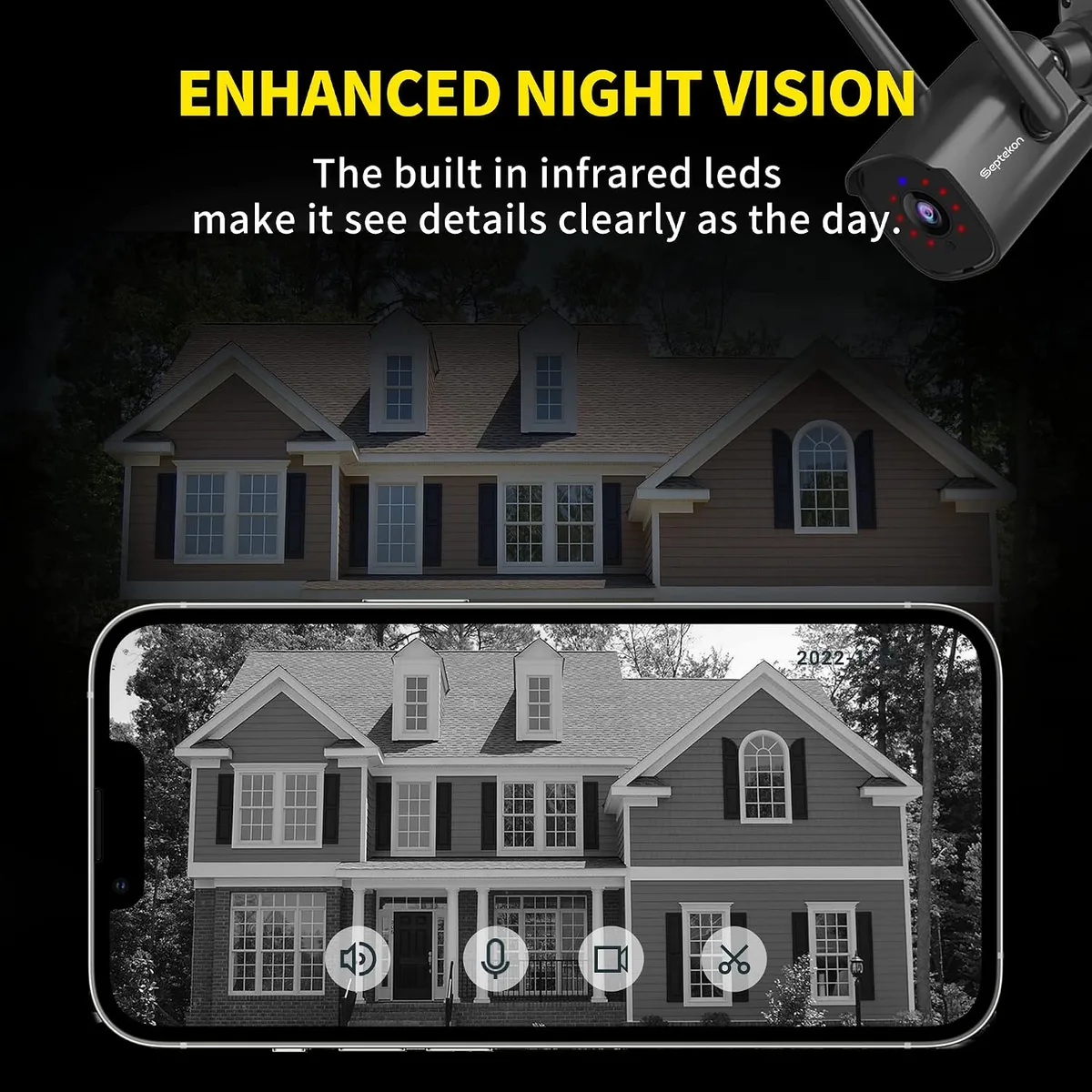
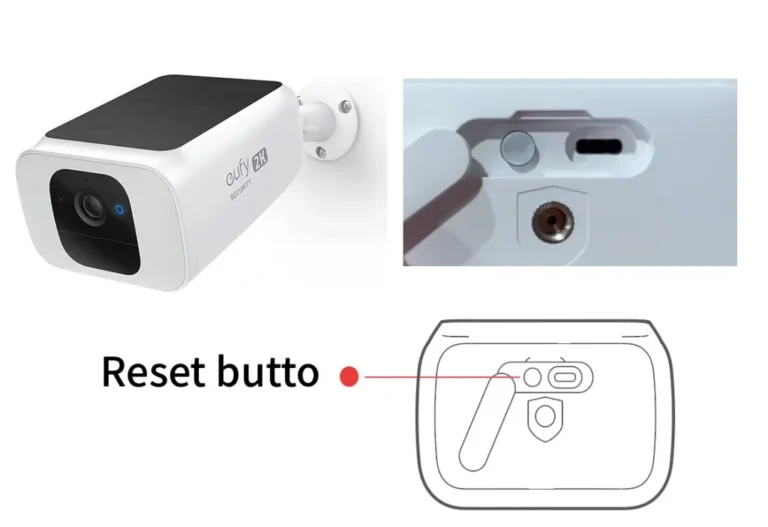
Image source: Web (Bing) / manuals.plus (Web image (fair-use with source credit))
Quick Answer
A security camera's "seeing distance" depends on resolution, lens, and environment. Cameras can detect movement hundreds of feet away. However, clear recognition of a person might be limited to 50-80 feet.
Identification of specific details like faces or license plates often requires much closer ranges, sometimes under 20-30 feet.
Seeing Distance: What Does It Really Mean?
When we talk about "how far can a security camera see," we're really discussing its ability to capture usable information at a distance. This isn't just about spotting something; it's about whether that something is clear enough to be useful. Manufacturer specifications often give a number, but what that number represents varies.
The real value lies in distinguishing between basic detection, being able to recognize what you're seeing, and finally, being able to identify specific details.
Detection vs. Recognition vs. Identification
Understanding these three levels is crucial for setting realistic expectations:
- Detection: This is the most basic level, where the camera simply registers that an object or movement is present within its view. At this stage, the image might be extremely blurry, and you wouldn't be able to tell if it's a person, an animal, or a shadow. For many standard bullet cameras, detection can extend hundreds of feet, especially in good lighting.
- Recognition: This means you can tell what the object is. You can distinguish a person from a car, or a dog from a large bush. This requires more detail than simple detection. For many modern IP cameras, recognition might be achievable at distances between 50 to 80 feet, depending heavily on the camera's resolution and lens.
- Identification: This is the highest level of clarity, where you can make out specific, identifiable features. This includes things like recognizing a person's face, reading a license plate number, or determining the make and model of a vehicle. Achieving identification typically requires much higher resolutions and often a narrower field of view, limiting the practical distance to perhaps 10 to 30 feet for crucial details like faces.
The Key Ingredients: What Affects a Camera's "Sight"
Several technical and environmental factors combine to determine how far a security camera can effectively "see" and what level of detail you’ll get at that distance. It's a system where each component plays a critical role.
Resolution: Pixels to Details
Resolution refers to the number of pixels a camera sensor captures. Think of pixels as tiny dots that make up the image. More pixels mean more dots, which translates to finer details.
- 1080p (Full HD): This is a common standard, offering a good balance of detail and file size. It's generally sufficient for recognizing people within a reasonable range, typically up to about 50-60 feet.
- 2K/4MP: A step up from 1080p, providing more pixels and better detail for recognition at slightly longer distances.
- 4K (UHD): With significantly more pixels than 1080p, 4K cameras offer the highest level of detail. This allows for better recognition and even identification at greater distances, or the ability to zoom in on a wide view and still retain useful detail. Manufacturer specifications from companies like Reolink indicate that 4K resolution can offer improved detail for object recognition at distances of up to 100 feet.
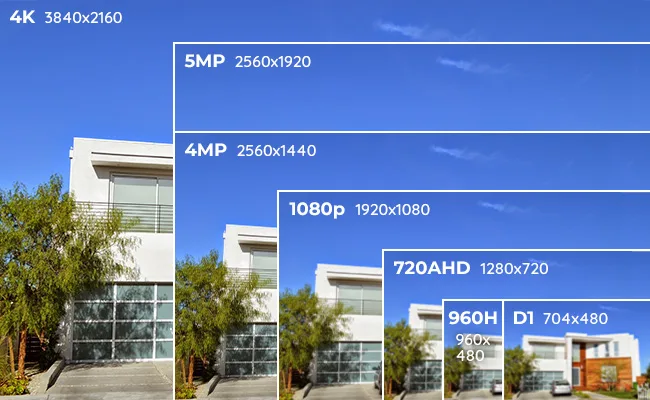
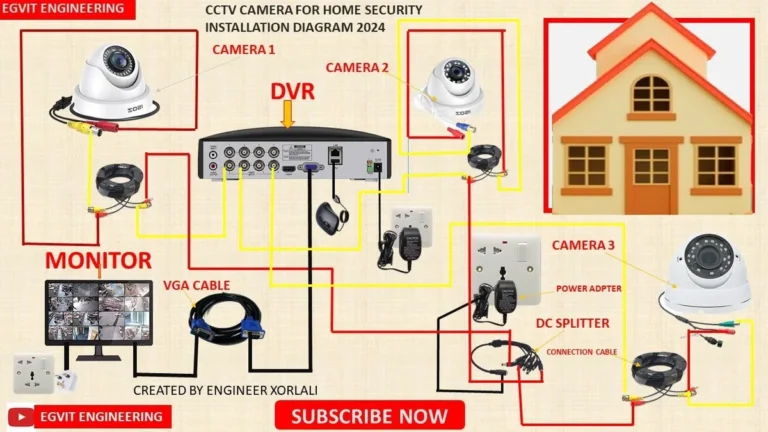
Image source: Web (Bing) / reolink.com (Web image (fair-use with source credit))
Field of View: Wide Angle vs. Narrow Focus
The field of view (FOV) dictates how wide an area the camera captures. It’s measured in degrees, and it directly impacts how detailed distant objects appear.
- Wide FOV (e.g., 100°+): These cameras cover a broad area, making them great for general surveillance of large spaces like backyards or living rooms. However, the wide angle compresses distant objects, making them smaller and less detailed. If you need to see far away with a wide lens, the clarity will suffer significantly.
- Narrow FOV (e.g., 30°-60°): These cameras focus on a smaller, more specific area. They act more like a zoom lens, bringing distant objects closer and making them appear larger and more detailed. This is essential if your primary goal is to identify something far away, like a person approaching your property from the street.
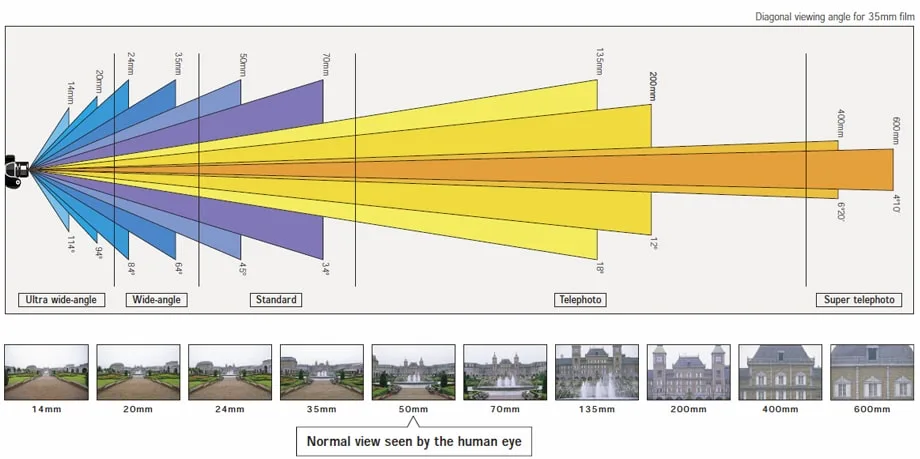
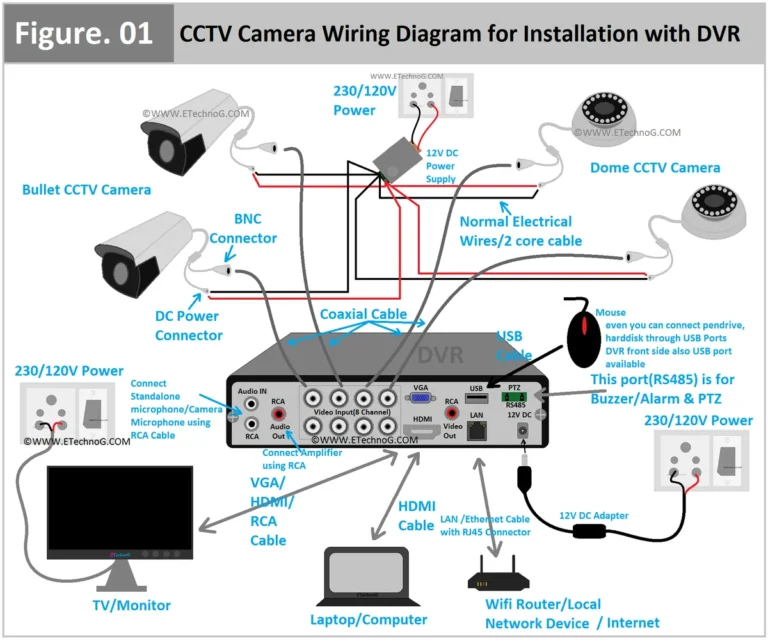
Image source: Web (Bing) / deepsentinel.com (Web image (fair-use with source credit))
Lens Type & Focal Length: Zooming In
The lens is essentially the "eye" of the camera. Its focal length, measured in millimeters (mm), directly determines the field of view and the effective range.
- Short Focal Length (e.g., 2.8mm, 4mm): These lenses provide a wide field of view, ideal for capturing large scenes but offering less detail at a distance.
- Long Focal Length (e.g., 12mm, 25mm): These lenses offer a narrow field of view, effectively zooming in on distant subjects. A camera with a 25mm lens, for instance, will see much further with more detail than one with a 4mm lens, though it will cover a much smaller area.
- Varifocal Lenses: Some cameras feature varifocal lenses, allowing you to manually adjust the focal length and thus the field of view and zoom level, offering flexibility.
Night Vision: Seeing in the Dark
Most modern security cameras include some form of night vision, typically infrared (IR) illuminators. These LEDs emit invisible infrared light, which the camera’s sensor can detect, illuminating the scene without a visible light source.
- IR Range: Manufacturers often specify an IR range (e.g., 30 meters or 100 feet). This indicates how far the IR light can effectively illuminate. However, it's important to remember that IR illumination is for detection. While it helps the camera "see" in the dark, the image quality is monochrome (black and white) and might still lack the detail for positive identification at the maximum IR range.
- Starlight/Low-Light Sensors: Some advanced cameras have sensors that are exceptionally good at capturing detail in very low ambient light, often producing usable color images even at dawn or dusk, extending the practical viewing range beyond what typical IR might offer for recognition.
Visualizing Camera Ranges: What to Expect
Seeing charts and numbers is one thing, but visualizing what different camera ranges look like in practice is much more helpful. The practical outcome of resolution, field of view, and lens choice becomes clear when you imagine them in a real-world scenario.
Typical Ranges for Different Camera Types (Bullet, Dome, PTZ)
Here’s a general breakdown of what you might expect from common camera types, keeping in mind that these are approximations and actual performance can vary significantly based on specific models and conditions.
- Wide-Angle Dome Cameras: Typically used for broad indoor coverage or smaller outdoor areas. Their wide field of view (often 100° to 120°) means they excel at covering a lot of ground but struggle with distant details.
- Detection: Up to 30-50 feet.
- Recognition: About 15-25 feet.
- Identification: Limited to 5-10 feet for facial clarity.
- Bullet Cameras: Often found on the exterior of homes and businesses. They usually have a more focused field of view than dome cameras, offering a better balance between coverage and detail.
- Detection: Up to 50-80 feet.
- Recognition: Around 25-40 feet.
- Identification: Potentially 10-20 feet for clear facial features.
- PTZ (Pan-Tilt-Zoom) Cameras: These are designed for active monitoring of large areas. Their ability to pan, tilt, and zoom means their effective range is highly dynamic.
- Detection: Can extend to 500+ feet.
- Recognition: Up to 150+ feet.
- Identification: Can achieve identification at 50+ feet, especially with their zoom capabilities.
Understanding Telephoto Lens Cameras
For scenarios requiring very long-range surveillance, cameras with telephoto lenses are crucial. These lenses have a long focal length, which significantly narrows the field of view but dramatically increases the effective distance for detection and recognition.
- Example: A camera with a 12mm or 25mm lens might be marketed for monitoring a distant gate or a specific point of entry.
- Detection: Can reach 200+ feet.
- Recognition: Up to 100+ feet.
- Identification: May provide recognizable detail at 30-50+ feet, depending on the clarity of the subject.
When Range Isn't Enough: Recognizing and Identifying Threats
It's easy to get caught up in the maximum distance a security camera can "see," but the real value often lies in its ability to capture actionable information. Simply detecting movement is rarely enough; you need to know what that movement represents. This is where the difference between detection, recognition, and identification becomes critical.
Imagine a camera that detects motion 300 feet away. That's great for knowing something is happening, but if it's just a deer or a falling branch, it’s not useful for security. If the camera can recognize it as a person at 100 feet, that’s more helpful.
But to be truly useful for security purposes, like identifying a suspect or confirming a visitor, you need the camera to provide identification capabilities at a sufficient distance.
For example, if your goal is to read a license plate entering your property, a camera with a wide 120° field of view might detect the car from 200 feet away, but the plate will be a tiny, unreadable blur. A camera with a narrow 15° field of view and a long focal length lens might be able to identify the license plate clearly from 50 feet away, even if its overall detection range is less. Therefore, focusing solely on maximum distance can be misleading; the quality of the image at a given distance is paramount.
Common Mistakes When Judging Camera "Sight"
When people look to buy or set up security cameras, there are a few common pitfalls that lead to disappointment with viewing distances and clarity. Avoiding these mistakes is key to getting a system that actually works for you.
- Relying Solely on Specs: Manufacturer specs, like "100 ft IR range" or "wide angle lens," are just starting points. They don't account for real-world conditions like poor lighting, weather, or image compression artifacts. A spec sheet might say 100 feet, but in practice, useful identification might only be possible at 20 feet. Always consider how those specs translate to real-world detail.
- Ignoring Environmental Factors: Fog, heavy rain, snow, dust, and even bright sunlight can significantly reduce a camera's effective viewing distance and clarity. A camera advertised to see 50 feet might only see 20 feet clearly on a foggy night. Similarly, strong backlighting can obscure details or even blind the camera temporarily. It's crucial to assess your typical environmental conditions.
- Confusing Detection with Identification: As discussed, detecting movement is easy for most cameras. The challenge is getting clear, identifiable images. Many buyers mistakenly assume that if a camera detects something far away, they will be able to identify it clearly. This is rarely the case without specialized, long-range cameras or optical zoom capabilities.
Choosing the Right Camera for Your Needs: Use Cases
The "right" viewing distance for a security camera isn't universal; it's entirely dependent on what you need to monitor and why. Understanding your specific needs will guide you toward the camera with the appropriate capabilities.
- Home Entrance Security: For monitoring your front door and porch, you need to clearly see a visitor's face. This typically requires a camera that offers good recognition and identification at relatively short ranges, perhaps 10-20 feet for facial clarity. A wide-angle lens is often beneficial here to capture the full porch area.
- Driveway and Yard Monitoring: If you want to see who is pulling into your driveway or walking across your yard, you’ll need a camera with a longer detection and recognition range. A camera that can recognize a person or vehicle at 50-80 feet would be suitable. A bullet camera with moderate zoom or a 4K camera with a balanced FOV often works well.
- Perimeter Security: For monitoring a large property, boundary lines, or distant gates, you need cameras designed for longer ranges. This might involve using PTZ cameras that can zoom in as needed, or specialized bullet cameras with telephoto lenses. The primary goal here is often detection and recognition at distances of 100 feet or more.
- General Surveillance: For an overall view of an area, like a large backyard or a public space, a camera with a wide field of view is preferred, even if the identification distance is shorter. The priority is covering a broad area for general awareness.
Expert Tips for Maximizing Your Camera's View
Getting the most out of your security cameras, especially when it comes to viewing distance and clarity, involves a few smart strategies beyond just buying the most expensive model. These practical tips can significantly improve performance.
- Strategic Placement is Key: Mount cameras so they have a clear, unobstructed view of the area you want to monitor. Avoid pointing them directly at bright lights or the sun, which can cause glare or washout. For long-range viewing, ensure there are no trees, structures, or other objects in the direct line of sight. Consider the sun's path throughout the day and year.
- Leverage Lighting: While IR night vision is standard, don't underestimate the power of external lighting. Well-lit areas greatly improve image quality for all cameras, allowing for better recognition and identification even at moderate distances. Motion-activated lights can be a cost-effective way to boost illumination when needed.
- Understand Your Camera's Limits: If your camera has optical zoom, learn how to use it effectively. For identifying something far away, zoom in to get a clearer shot rather than relying on digital zoom, which just enlarges pixels and degrades quality. For wide-angle cameras, accept that distant details will be less defined.
Frequently Asked Questions (FAQs)
Can I make my existing security camera see further?
Generally, you can't physically extend the "seeing distance" of an existing camera's lens or sensor. However, you can improve image clarity at its current range by ensuring optimal lighting, cleaning the lens regularly, and properly aiming it. For significantly greater range, you would need to replace the camera with a model featuring a longer focal length lens or higher resolution.
How does infrared range differ from visible light range?
Infrared (IR) range refers to how far the camera's built-in infrared illuminators can project light to illuminate a scene for its black-and-white night vision. Visible light range pertains to how far the camera can capture usable, often color, images in ambient light conditions. IR illumination helps detect objects in darkness but doesn't guarantee identification detail, whereas good visible light performance allows for better recognition and identification.
What's the difference between digital and optical zoom for range?
Optical zoom uses the camera's lens to magnify an image without losing quality, effectively extending its range and detail. Digital zoom, conversely, simply crops and enlarges a portion of the existing image, leading to a significant loss of clarity and detail. For true long-range viewing and identification, optical zoom is vastly superior.
How far can a 4K security camera see compared to a 1080p camera?
A 4K security camera can typically see further with better detail than a 1080p camera. While both might detect movement at similar distances (e.g., 100+ feet), the 4K camera's higher resolution (four times the pixels of 1080p) means you can achieve clear recognition and potentially identification at greater distances. This allows for zooming in on a 4K image and still retaining usable detail, something that quickly becomes pixelated with 1080p.