How High Should CCTV Cameras Be Installed?
Getting your security cameras positioned correctly is absolutely crucial for them to do their job effectively. If you've ever wondered how high should CCTV cameras be installed, you're not alone; it's a common question that impacts the entire system's performance. Getting this wrong means you could be missing critical details or leaving yourself vulnerable.
Our research shows that ideal camera height varies depending on the specific environment and the type of camera you're using. For instance, according to manufacturer specifications, many outdoor dome cameras are recommended for mounting between 8 to 15 feet to balance broad coverage with detail capture. Let's dive into how to get this right for your situation.
Quick Answer
CCTV cameras should generally be installed between 8 and 15 feet high. This range offers a good balance, providing a wide field of view while capturing enough detail for identification. For higher security needs or specific areas, heights up to 20 feet might be considered.
Avoid mounting too low to prevent tampering and too high to avoid losing identifying details like faces.
Why Camera Height Matters for Effective Surveillance
Getting the height of your security cameras right is fundamental to effective surveillance. It's not just about sticking a camera up somewhere; it's about strategically positioning it to capture the most useful information. The height directly influences what the camera can see, how clearly it can see it, and how easily it might be accessed or avoided by potential intruders.
Seeing the Whole Picture: Field of View and Coverage
The lens on a CCTV camera has a specific field of view (FOV), which is the extent of the scene that the camera captures. Manufacturer specifications often detail this FOV in degrees. When a camera is mounted too low, its FOV might be obstructed by passing cars, people, or even landscaping, creating blind spots.
Conversely, mounting it too high can make it difficult to distinguish faces or read license plates, even if the overall area is covered. For example, a wide-angle lens mounted at 8 feet might cover a 30-foot driveway, but if mounted at 20 feet, the detail in that same driveway becomes significantly reduced.
Balancing Detail and Overview: Lens Choice and Height
Your choice of camera lens plays a huge role in determining the optimal mounting height. Cameras with wider lenses (smaller focal length, often measured in millimeters like 2.8mm or 4mm) capture a broader scene, making them good for general overview. These are often suitable for slightly lower mounts, perhaps 8-12 feet, to ensure you still get facial detail.
Cameras with narrower lenses (larger focal length, like 8mm or 12mm) provide a more focused, zoomed-in view over longer distances. These can sometimes be mounted slightly higher, around 10-15 feet, to maintain detail on a specific point of interest like a gate or doorway without distorting the image from being too close.
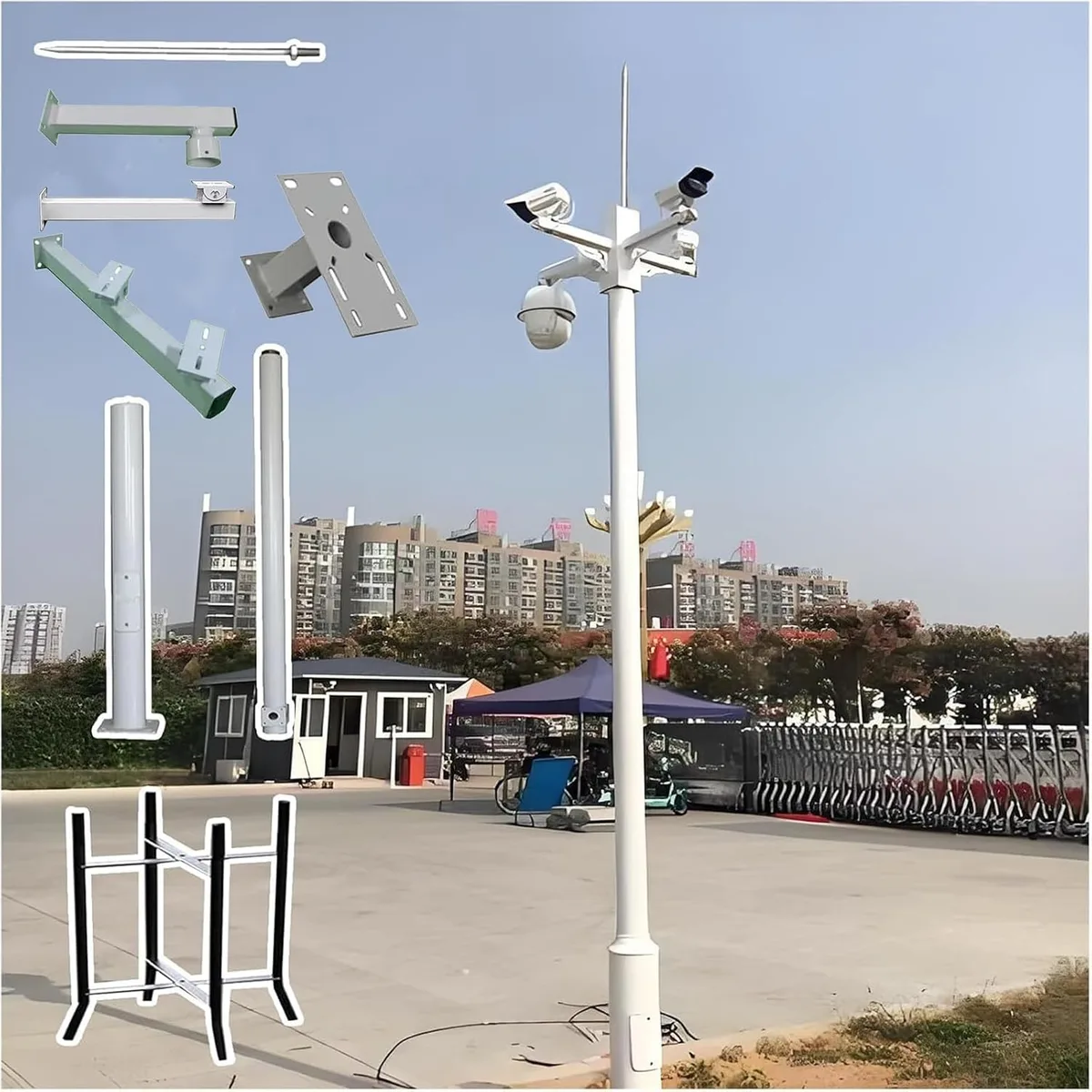
Image source: Web (Bing) / amazon.ca (Web image (fair-use with source credit))
Avoiding the Blind Spots: Practical Placement Strategies
Blind spots are areas that your security cameras cannot see. Incorrect mounting height is a primary cause. If a camera is mounted too low, things like vans parked in a driveway or dense shrubs can create significant blind areas.
If a camera is mounted too high on a corner, the area directly beneath it might be invisible. Strategically planning your camera height, often in conjunction with other cameras, is key to eliminating these gaps. For example, placing a camera at 10 feet can cover a doorway, while another camera at 15 feet could monitor the approach to that doorway, ensuring no one can sneak up unseen.
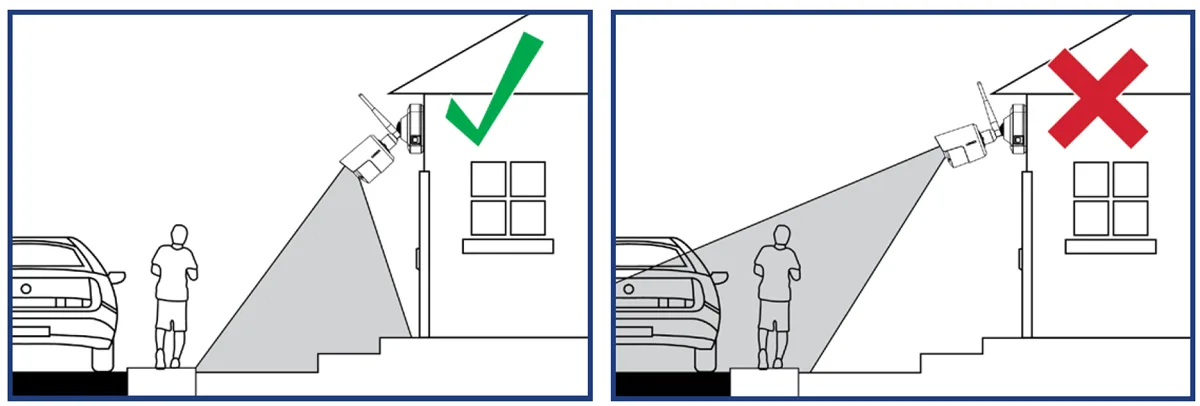
Image source: Web (Bing) / exploramadeira.com (Web image (fair-use with source credit))
Deterrence and Detection: The Psychological Impact of Height
The height of a camera can also influence its effectiveness as a crime deterrent. Visible cameras mounted at a reasonable height (say, 8-12 feet) are more likely to be noticed by potential intruders, acting as a visible warning. If a camera is too low and easily accessible, it might be seen as an easy target for vandalism or disabling, reducing its deterrent effect.
Conversely, if cameras are mounted extremely high, they might be perceived as less of a threat to a trespasser, though they can still be effective for monitoring.
Mounting Your CCTV Cameras: A Step-by-Step Visual Walkthrough
Getting your CCTV cameras installed at the right height involves a few key steps, from planning to the final adjustment. While a professional installer will handle the specifics, understanding the process can help you guide them or tackle a DIY project with confidence. It’s all about setting yourself up for the best possible view and protection.
Site Survey: Planning Your Camera Locations
Before any drilling begins, conduct a thorough site survey. Walk around your property, imagining where you need surveillance most. Consider entry points, vulnerable areas, and where potential activity might occur.
For each planned camera location, think about the distance you need to cover and the level of detail required. This initial planning phase is where you'll estimate the optimal mounting height based on the camera’s specs and your property layout.
Choosing the Right Mount: Bullet vs. Dome vs. PTZ
The type of camera you're installing influences its mounting. Bullet cameras often come with adjustable brackets that allow for a good range of tilt and pan, making them versatile for various heights. Dome cameras, often more discreet, might have slightly different mounting considerations, and their enclosure can sometimes affect the angle of view.
Pan-Tilt-Zoom (PTZ) cameras, which offer remote control over their movement, also have specific mounting needs, often requiring a more robust and stable fixture due to their moving parts and heavier weight.
Achieving the Optimal Angle: Tilting and Aiming
Once the camera is physically mounted, the crucial step is aiming it correctly. Most security cameras, whether bullet or dome, have an adjustable bracket. You'll want to tilt the camera to get the desired coverage area.
If you're mounting at 10 feet, you might tilt it downwards to capture facial details on a doorstep, or tilt it slightly upwards to cover a wider section of your yard. For PTZ cameras, the initial tilt might be set, but you'll refine the aim through the camera's software interface later.
Securing the Installation: Tools and Techniques
Properly securing the camera mount is vital for stability and longevity. This involves using appropriate hardware for your wall type, masonry anchors for brick, lag bolts for wood, or specific mounts for metal surfaces. Manufacturer specifications, often found in the installation manual, will detail the recommended mounting hardware.
For outdoor installations, ensuring the mount is weather-resistant and sealed against moisture ingress is essential to prevent corrosion and electrical issues. As of 2026, ensure all electrical work complies with local building codes.
Common Mistakes When Setting CCTV Camera Heights (And How to Fix Them)
Even with the best intentions, it's easy to make missteps when deciding where to place your security cameras. The height, in particular, is a common area for error, leading to footage that’s less useful than it could be. Understanding these typical pitfalls can save you a lot of frustration and ensure your surveillance system is actually doing its job.
Too High: Missing Crucial Details
Mounting a camera too high, perhaps above 15 or 20 feet, can severely limit its ability to capture identifying details. While it might give you a broad overview of an area, faces can become unrecognizable blobs, and it might be impossible to read license plates on approaching vehicles. This level of detail is often necessary for law enforcement or insurance claims.
- The Fix: If your camera is too high and lacking detail, try repositioning it lower. If lowering isn't feasible due to architecture or access, consider adding a secondary camera at a lower, more strategic height to capture close-up detail, or explore cameras with powerful optical zoom capabilities.
Too Low: Inviting Tampering and Vandalism
Conversely, placing cameras too low, typically below 8 feet, makes them an easy target. They can be easily reached, vandalized, or even stolen by determined individuals. This not only compromises your surveillance but also means you've spent money on equipment that is easily defeated.
- The Fix: Relocate cameras that are too low to a more secure height. Use tamper-resistant mounting brackets, and consider vandal-proof camera housings if the location is particularly exposed. Ensure wires are also concealed and protected from accidental or deliberate damage.
Image source: Web (Bing) / visionsafetys.com (Web image (fair-use with source credit))
Direct Glare: Rendering Footage Useless
The height can also indirectly contribute to glare issues. Mounting a camera directly facing the sun, especially at sunrise or sunset, can create severe glare that washes out the image. While this is more about camera positioning and angle, an incorrectly chosen height might force a suboptimal angle to try and capture a wide area, inadvertently pointing it towards strong light sources.
- The Fix: Adjust the camera’s angle and height to avoid direct sunlight. Use anti-glare shields or housings if necessary. Sometimes, moving the camera just a few feet up or down or slightly to the side can completely eliminate glare problems.
Inconsistent Angles: Creating Gaps in Coverage
If you have multiple cameras, inconsistent mounting heights and angles can lead to overlap in some areas and significant gaps in others. This makes it hard to track movement seamlessly across your property. For example, a low-angle camera might see the ground directly below it, while a high-angle camera misses it entirely.
- The Fix: Plan your camera layout holistically. Ensure overlapping fields of view where needed for continuous coverage, and adjust heights and angles to complement each other rather than compete. A site survey tool or simulation can help visualize this before installation.
Real-World Scenarios: CCTV Camera Height in Action
Understanding theoretical advice is one thing, but seeing how CCTV camera height plays out in actual scenarios makes it much clearer. The optimal height isn't a one-size-fits-all number; it’s about adapting to the specific environment and what you need to monitor. Let's look at a few common situations.
Residential Driveways and Entryways
For a typical home driveway, mounting a camera around 10 to 12 feet high is often ideal. This height allows the camera to capture a good portion of the driveway’s length and width. More importantly, it provides a clear view of vehicle license plates as they enter and exit, and it’s usually high enough to capture faces of visitors or delivery personnel clearly without being too close to appear intrusive.
Mounting it much lower risks obstructions from cars, while mounting much higher makes identifying individuals difficult.
Business Entrances and Parking Lots
In a commercial setting, especially for businesses with parking lots, camera heights might need to be higher, often in the 15 to 20-foot range. This allows for broader coverage of larger areas and helps in monitoring multiple vehicles. However, for critical entry points like the main doors or cash registers, you’ll often see secondary cameras mounted at a lower height, around 8-10 feet, specifically to capture facial identification and transaction details.
This layered approach ensures both wide-area monitoring and detailed identification.
Retail Aisles and Storefronts
Inside retail environments, camera placement is critical for loss prevention. Cameras mounted above aisles, typically between 8 and 12 feet, can offer a good overview of shoppers' activities and help deter theft. If a camera is too high, it might miss details of what someone is placing in their pockets or bag.
If it's too low, it could be too close to the merchandise, creating a strange perspective or being easily avoided. For storefront windows or exit points, lower, outward-facing cameras are crucial for capturing external activity and vehicle information.
Essential Camera Specs for Optimal Height Performance
When you're figuring out how high should CCTV cameras be installed, the camera's own specifications are your best guide. These technical details tell you what the camera is capable of, and therefore, what kind of height will let it perform at its best. Ignoring these can lead to an installation that simply doesn't deliver the results you expect, no matter how carefully you place it.
Understanding Resolution's Role
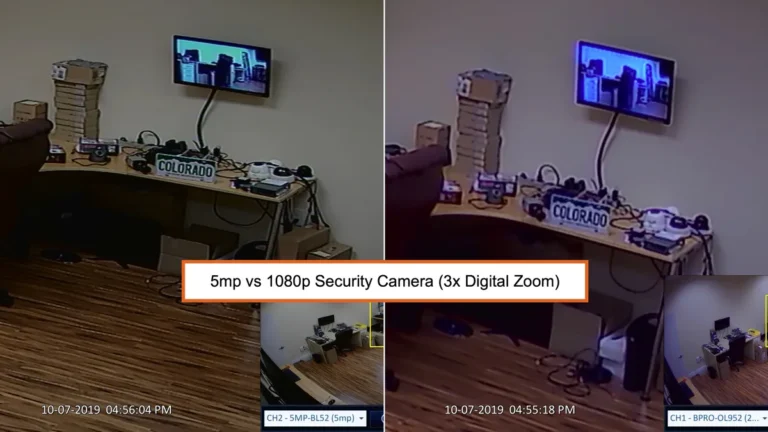
Camera resolution, measured in pixels (like 1080p or 4K), directly impacts the level of detail you can capture at a given height. A higher resolution camera can afford to be mounted higher because its sensor can pack in more detail. For example, a 4K camera mounted at 15 feet might still provide clear facial recognition, whereas a lower-resolution 720p camera at the same height might only show a blurry figure.
Our research indicates that for detailed identification at a distance, resolutions of 4MP or higher are generally recommended for optimal performance.
Infrared Range and Night Vision Effectiveness
The height at which you mount a camera can affect its night vision capabilities. Infrared (IR) illuminators on cameras project light to see in the dark. If a camera is mounted too high and too far away from the area it's meant to illuminate, its IR range might not be sufficient to provide a clear image.
Manufacturer specifications for IR range are usually given in meters or feet. For instance, a camera with a 30-meter IR range mounted 20 feet high might effectively illuminate a 60-foot area, but if mounted at 30 feet, the effective illuminated range for clear detail could be significantly less, especially if there are obstructions.
Weatherproofing for Outdoor Longevity
While not directly related to height, the camera's weatherproofing (its IP rating) is crucial for outdoor installations. Cameras mounted higher might be more exposed to wind-driven rain or direct sunlight. Ensuring your camera has an appropriate IP rating, such as IP66 or IP67, guarantees it can withstand harsh outdoor conditions, protecting the electronics and maintaining image quality over time, regardless of its mounting height.
This is critical for ensuring the camera continues to perform as expected, no matter the weather.
Security and Legal Considerations for Camera Placement
Even with the perfect height, improper placement can lead to legal headaches or compromise your security. It's not just about seeing; it’s about seeing legally and ethically. Understanding these considerations ensures your surveillance system protects you without infringing on others’ rights or breaking laws.
As of 2026, privacy laws continue to evolve, so staying informed is key.
Respecting Privacy: When and Where Not to Point Cameras
You absolutely cannot point security cameras where people have a reasonable expectation of privacy, such as into a neighbor's windows, backyards, or bathrooms. Even if your camera is mounted high, its field of view must avoid these private spaces. This principle applies to public areas too; while general public spaces are usually fine for surveillance, you can't intrude on private balconies or courtyards that might be visible from a public vantage point.
Always ensure your camera's line of sight is focused on your own property or publicly accessible areas where surveillance is permitted.
Electrical Safety During Installation
When mounting cameras, especially outdoors, you're dealing with electrical connections. It's vital to ensure all wiring is properly insulated, waterproofed, and routed safely. Incorrect installation can lead to electrical shorts, damage to the camera, or even fire hazards.
If you're not comfortable with electrical work, it's best to hire a qualified electrician or security installer. They understand the relevant electrical codes and best practices for safe outdoor installations, ensuring compliance with standards like those set by the National Electrical Manufacturers Association (NEMA) for outdoor enclosures.
Understanding Local Regulations
Laws regarding CCTV surveillance can vary significantly by city, state, or country. Some areas may have specific requirements about signage indicating that surveillance is in operation, or restrictions on the duration for which footage can be stored. Before you install any cameras, it's wise to research your local ordinances or consult with a legal professional to ensure full compliance.
Ignoring these rules could result in fines or legal action.
Frequently Asked Questions About CCTV Camera Height
What is the minimum recommended height for a security camera?
The minimum recommended height is typically around 8 feet. This is to deter tampering and vandalism while still allowing for detailed capture of individuals at ground level. Mounting below this height increases the risk of the camera being easily accessed and disabled.
Can I mount my security camera too high?
Yes, you can mount a camera too high. While a very high mount might offer a wide overview, it often sacrifices the detail needed for identification, such as facial features or license plates. If identification is a priority, a height that balances overview with detail, generally between 8 to 15 feet, is best.
Does camera type affect mounting height recommendations?
Absolutely. Bullet cameras with fixed lenses might have different height sweet spots than PTZ cameras or dome cameras with wider-angle lenses. For example, a wide-angle lens might work well at 8-10 feet for general coverage, while a camera with a telephoto lens for long-distance identification might be positioned higher, around 15-20 feet, to maintain focus.
Always check the camera's specific lens and specifications.
How does the environment affect camera height?
The environment plays a huge role. In areas with heavy foliage, mounting cameras lower might lead to obstructions. In open areas or areas prone to vehicle traffic, higher mounts can provide a better vantage point.
Consider potential blind spots created by buildings, trees, or even seasonal changes in vegetation when deciding on the optimal height.
Should I use different heights for different cameras on my property?
Yes, using a combination of heights is often the most effective strategy. You might use a lower-mounted camera (8-10 feet) at entry points for detailed identification and a higher-mounted camera (12-15 feet) for broader perimeter monitoring. This layered approach ensures you capture both overview and critical detail.