What Is CCTV Night Vision?
Ever watched a security video where the nighttime footage looks grainy, black and white, and maybe a little eerie? That's the magic of CCTV night vision at work. It's a crucial feature that allows surveillance cameras to capture usable images even when there's very little light, ensuring you don't miss a thing.
This technology essentially gives cameras the ability to see in conditions where our own eyes would struggle. Understanding how it functions is key to appreciating its value in security. As of 2026, advancements continue to improve image clarity and color reproduction in low-light scenarios, making surveillance more effective than ever.
Quick Answer
What is CCTV night vision? It's a feature enabling security cameras to record clear images in darkness. This is achieved through technologies like infrared illumination, sensitive low-light sensors, or thermal imaging.
These methods allow cameras to detect or amplify light invisible to the human eye, producing usable footage when visible light is absent.
Why Visuals Matter for Night Vision
When we talk about night vision, we're really talking about what the footage looks like. Explaining the technical details of how a camera amplifies light is one thing, but seeing the actual difference between a bright day, a dim evening, and pitch-black darkness is what truly drives home the value. Diagrams and example footage are incredibly helpful here.
You can read about infrared LEDs, but seeing how they cast an invisible light that bounces off objects to create a black and white image is much more impactful. Similarly, understanding that a "starlight" sensor can pull enough detail from faint moonlight to show a color image makes the technology feel less abstract. Without these visual cues, the concept remains a bit theoretical.
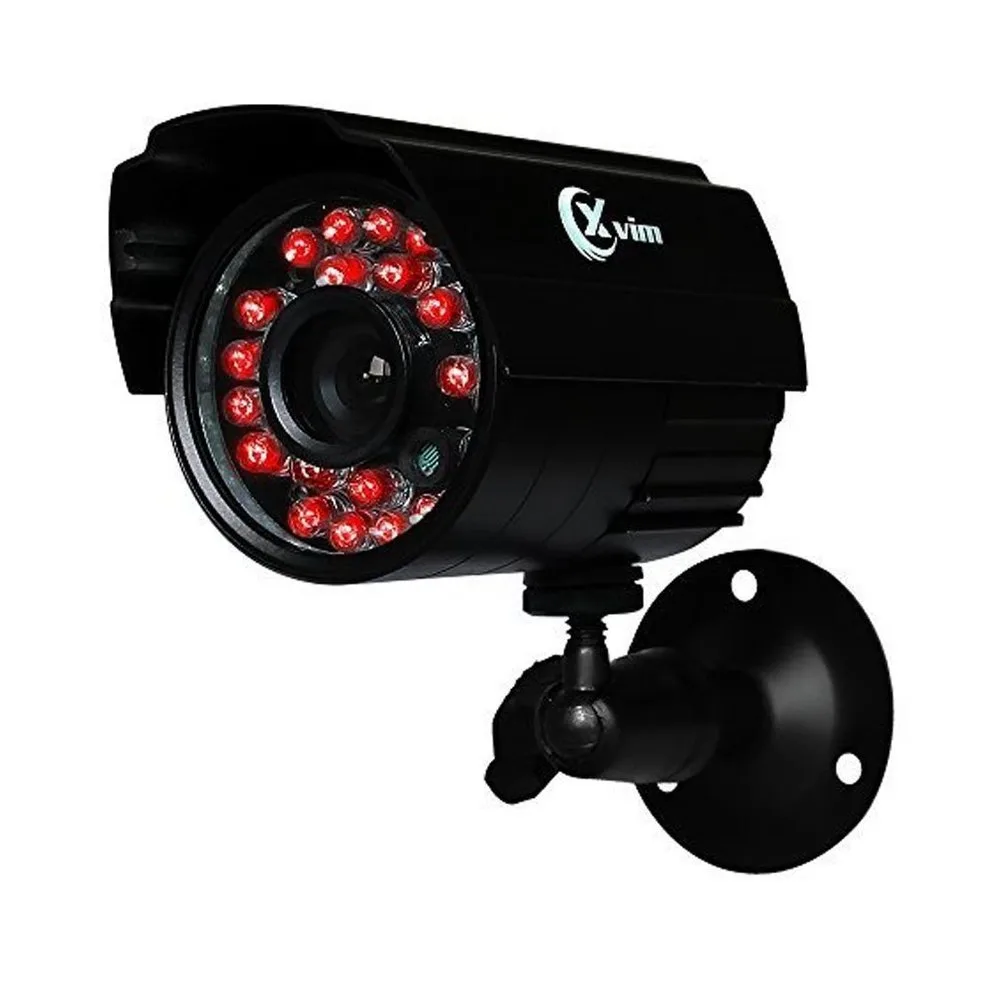
Image source: Web (Bing) / indiamart.com (Web image (fair-use with source credit))
Understanding the Tech: How CCTV Night Vision Works
At its heart, CCTV night vision is about detecting and processing light that human eyes can't easily perceive. There are a few primary ways cameras achieve this, each with its own strengths and applications. These technologies are what make nighttime surveillance practical.
Infrared (IR) Illumination Explained
This is the most common type of night vision you'll find on standard security cameras. It works by using infrared light, which is beyond the visible spectrum for humans. The camera has built-in IR LEDs that emit this invisible light.
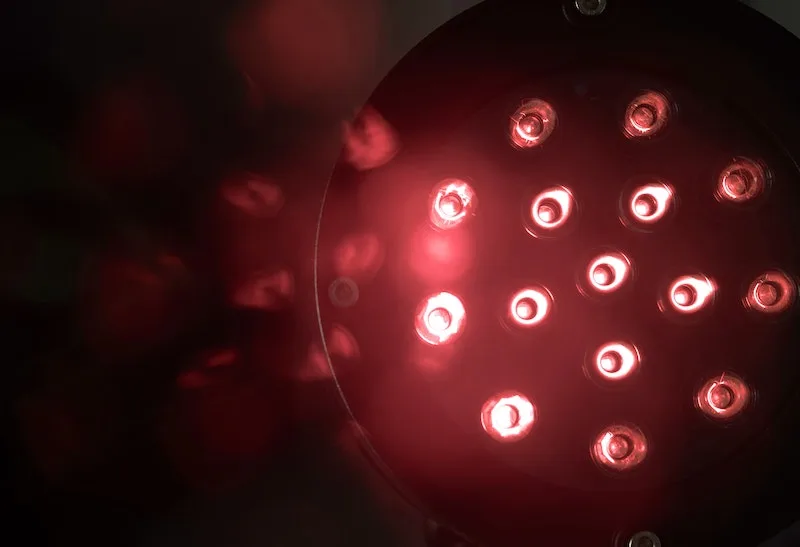
Image source: Web (Bing) / alfred.camera (Web image (fair-use with source credit))
When the ambient light drops below a certain threshold, these IR LEDs turn on. This light then illuminates the scene, bouncing off objects like walls, furniture, or people. The camera's sensor is specifically designed to "see" this reflected infrared light.
It then translates this light into a black and white image that you can view on your monitor. Think of it as a hidden flashlight that only the camera can "see." Manufacturer specifications often indicate the range of the IR illuminator in meters or feet, which is crucial for understanding its effectiveness in larger areas.
Low-Light Sensors and Beyond
Beyond active IR illumination, some cameras are equipped with highly sensitive low-light sensors. These cameras don't rely on emitting their own light; instead, they are designed to capture and amplify even the faintest existing light sources. This could be anything from a distant streetlight to residual moonlight.
Cameras with advanced low-light capabilities, sometimes marketed as "Starlight" or "Moonlight" technology, can often produce color images in surprisingly dim conditions. This is a significant advantage over traditional IR cameras, as color can provide more detailed information for identification purposes. The sensitivity of these sensors is often measured in lux, with lower lux ratings indicating better performance in dark conditions.
Thermal Imaging: A Different Kind of "Night Vision"
Thermal imaging is a more specialized form of night vision that operates on a fundamentally different principle. Instead of detecting visible light or even infrared light, thermal cameras detect heat. Everything with a temperature above absolute zero emits infrared radiation, or heat.
Thermal cameras capture this emitted heat and translate it into a visual image. Areas that are hotter appear as brighter colors (often white or yellow), while cooler areas appear darker (like black or blue). This technology is incredibly useful because it can see through smoke, fog, dust, and complete darkness, making it ideal for applications where visibility is severely compromised.
For instance, it can detect a person or animal even if they are camouflaged or hidden behind an obstruction, as their body heat will still be visible.
What Your Night Vision Footage Will Look Like
The visual output of CCTV night vision can vary significantly depending on the technology used and the specific conditions. Most commonly, especially with IR illumination, you'll notice a distinct shift from daytime clarity to nighttime monochrome.
Black and White and Sometimes Fuzzy
When your security camera is using infrared (IR) illumination, the footage will almost always be black and white. This is because the IR light itself is invisible, and the camera is essentially rendering the scene based on how the IR light reflects off different surfaces. The "brightness" you see in the footage corresponds to how much IR light is bouncing back to the camera.
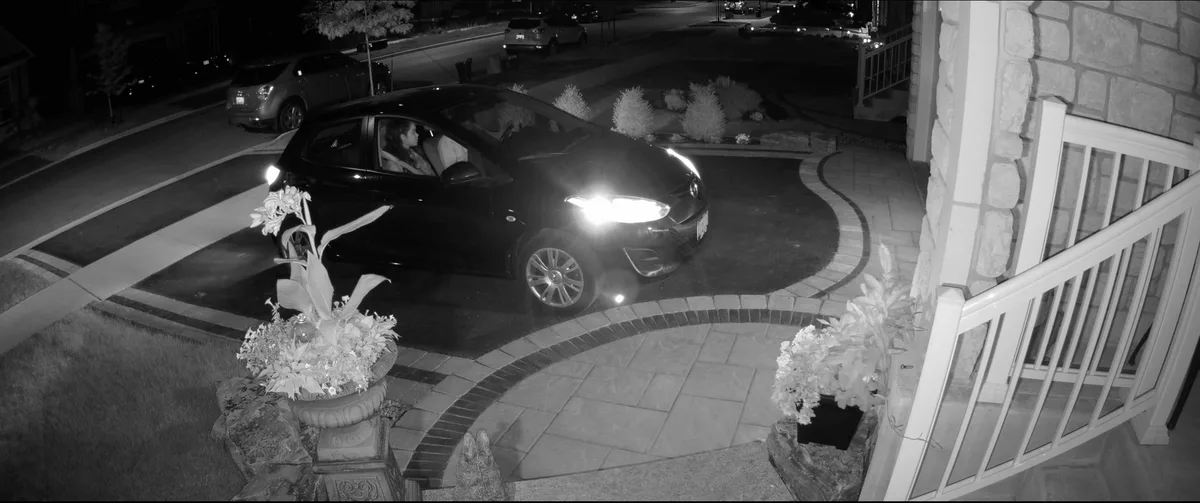
Image source: Web (Bing) / thaydung.com (Web image (fair-use with source credit))
In many cases, especially if the camera is pushing its limits in very low light, the image can appear grainy or fuzzy. This graininess is a byproduct of the sensor amplifying the weak light signal. While some cameras are better than others at minimizing this, it's a common characteristic of traditional night vision.
If you're experiencing excessive blur, it might be worth checking why is my security camera blurry for troubleshooting tips.
Spotting IR Artifacts and Glare
When IR LEDs are active, you might notice specific visual artifacts, particularly "halos" or glares. These often appear as bright white circles or fuzzy spots around reflective surfaces, like the eyes of an animal, metallic objects, or even dew on a leaf. This happens because the IR light is reflecting very strongly off these surfaces directly back into the camera lens.
Sometimes, if the IR LEDs are too close to the camera lens, the light can "bleed" back onto the lens itself, causing a diffuse, white fog effect over the entire image. This is why proper camera positioning and, in some cases, using cameras with built-in IR cut filters are important. If your footage is consistently showing glare or a foggy appearance, it might be an indication of a setup issue or a camera limitation that could impact why is my security camera showing a black screen or affecting its overall picture quality.
Key Benefits: Why Night Vision is a Must-Have
Night vision isn't just a nice-to-have feature; for many security applications, it's an essential component that dramatically increases the effectiveness of surveillance systems. It addresses the fundamental limitation of standard cameras: their dependence on visible light.
24/7 Surveillance and Deterrence
The most significant benefit of CCTV night vision is its ability to provide continuous surveillance, around the clock. Without it, your security cameras would effectively become useless once the sun goes down, leaving your property vulnerable. Night vision ensures that activity can be monitored and recorded regardless of the time of day.
Furthermore, many cameras with IR illumination have visible red LEDs that act as a deterrent. Potential intruders often avoid properties where they know they are being watched, and the visible presence of these LEDs can make them think twice before attempting any unauthorized entry. This passive deterrence is a valuable first line of defense.
Capturing Crucial Evidence
In the unfortunate event that a security incident occurs, the footage captured by your cameras can be invaluable evidence. Night vision ensures that even if the incident happens in darkness, you still have a record of what transpired. This can be critical for identifying perpetrators, understanding the sequence of events, and supporting law enforcement investigations.
The ability to capture clear images, even if in black and white, is often the difference between a solved case and an unsolved one. This capability is particularly important for areas where why is my security camera not detecting motion or for understanding the context around an event.
Best For: Matching Night Vision Tech to Your Needs
Choosing the right night vision technology depends heavily on what you need to see and under what conditions. Different methods excel in different scenarios, so understanding these distinctions helps you pick the best tool for the job.
- Infrared (IR) Illumination: This is your go-to for general security monitoring in moderate darkness. It's effective for identifying intruders or vehicles in a driveway or yard when there's minimal ambient light. It's the most common and often the most cost-effective solution for everyday security needs.
- Low-Light Sensors: If you need color footage in dim conditions, like a well-lit street at night or a room with just a faint lamp on, low-light sensors are superior. They provide more detail and can help with identifying faces or colors more accurately than IR, without requiring you to add external lights.
- Thermal Imaging: This technology is best for situations where visibility is severely compromised. Think of spotting someone in dense fog, smoke, or complete darkness where there's no light whatsoever. It's also excellent for detecting heat signatures of people or animals, regardless of their visual appearance, making it ideal for search and rescue or certain industrial applications.
Common Night Vision Pitfalls to Avoid
While night vision technology is a powerful tool, it's not without its limitations and potential issues. Understanding these common pitfalls can help you set realistic expectations and avoid frustrations with your surveillance system.
The Limits of IR Range
One of the most significant limitations of infrared (IR) illumination is its finite range. While manufacturers specify an IR range (e.g., 30 meters or 100 feet), this is often an ideal measurement under perfect conditions. In reality, factors like fog, heavy rain, or obstructions can significantly reduce the effective range.
If your camera's IR range is insufficient for the area you need to monitor, you might only capture grainy or unidentifiable images of activity occurring beyond that limit. This is why it's crucial to select cameras with an IR range appropriate for the size of the area you intend to cover. If you find your footage is too unclear from a distance, it might be time to consider cameras with a longer IR range or supplemental IR illuminators.
This issue can also contribute to why is my security camera delayed if the system is struggling to process faint signals.
When "Night Vision" Isn't Enough
It's important to remember that "night vision" is a broad term, and the quality of the image can still be quite variable. While IR illumination can provide basic visibility, it often sacrifices color and fine detail. In situations where positive identification is critical, black and white, grainy footage might not be sufficient on its own.
Moreover, the effectiveness of night vision can be compromised by environmental factors or improper setup. For instance, if the camera's lens is dirty or obstructed, it will impact the quality of both visible and IR light captured. Similarly, strong ambient light sources can sometimes interfere with IR performance or cause the camera to struggle in switching between day and night modes.
If you notice inconsistent performance, checking how to fix security camera motion detection might be necessary, as some settings can be affected by lighting.
Who Needs CCTV Night Vision?
Essentially, anyone who relies on continuous surveillance for security or monitoring purposes can benefit from CCTV night vision. It's not just for high-security installations; it's a practical feature for a wide range of users and scenarios.
Homeowners and Businesses
For homeowners, night vision cameras offer peace of mind by extending security coverage into the dark hours. Whether it's monitoring a driveway, backyard, or porch, these cameras help deter crime and provide evidence if an incident occurs. Businesses, from small shops to large warehouses, also rely heavily on night vision to protect assets, deter theft, and maintain a secure perimeter after closing.
The ability to detect activity in dimly lit areas is crucial for preventing losses.
Specific Surveillance Needs
Beyond general security, night vision is invaluable for more specific applications. This includes monitoring wildlife, observing livestock at night, or providing security in areas with unpredictable power outages. For facilities that operate 24/7, like data centers or critical infrastructure, continuous visual oversight is non-negotiable, and night vision makes this possible.
It's also a key component for systems where what is continuous recording on security cameras is implemented, ensuring no footage is missed.
FAQs About CCTV Night Vision
What's the difference between IR night vision and thermal imaging?
IR night vision uses infrared light to illuminate a scene, making objects visible in black and white. Thermal imaging detects heat signatures, allowing you to see objects based on their temperature, even in complete darkness or through obstacles.
Can night vision cameras see in total darkness?
Yes, cameras with IR illumination can see in total darkness by using their built-in IR LEDs. Thermal cameras can also see in total darkness by detecting heat. Cameras relying solely on low-light sensors need at least a minimal amount of ambient light to function.
Does night vision footage always look black and white?
Typically, IR-based night vision produces black and white footage. However, some advanced low-light sensors are capable of capturing color images even in very dim conditions. Thermal imaging produces images based on heat, often using a color spectrum to represent temperature differences.
How far can CCTV night vision see?
The range varies significantly. IR illuminators on standard cameras might range from 10 to 100 meters (30 to 300 feet). Thermal cameras can often see much further, sometimes kilometers, depending on the model and atmospheric conditions.
Low-light sensors' effectiveness depends entirely on the available ambient light.