How Do Outdoor Security Cameras Work
Ever wondered what keeps an eye on your property when you're not around? Outdoor security cameras are our silent sentinels, constantly watching. Understanding how they work is key to choosing the right system and ensuring your home stays protected.
These devices rely on a clever combination of lenses, sensors, and connectivity to capture and transmit everything they see. Manufacturer specifications often detail frame rates up to 60 FPS for smooth video, which is crucial for tracking activity.
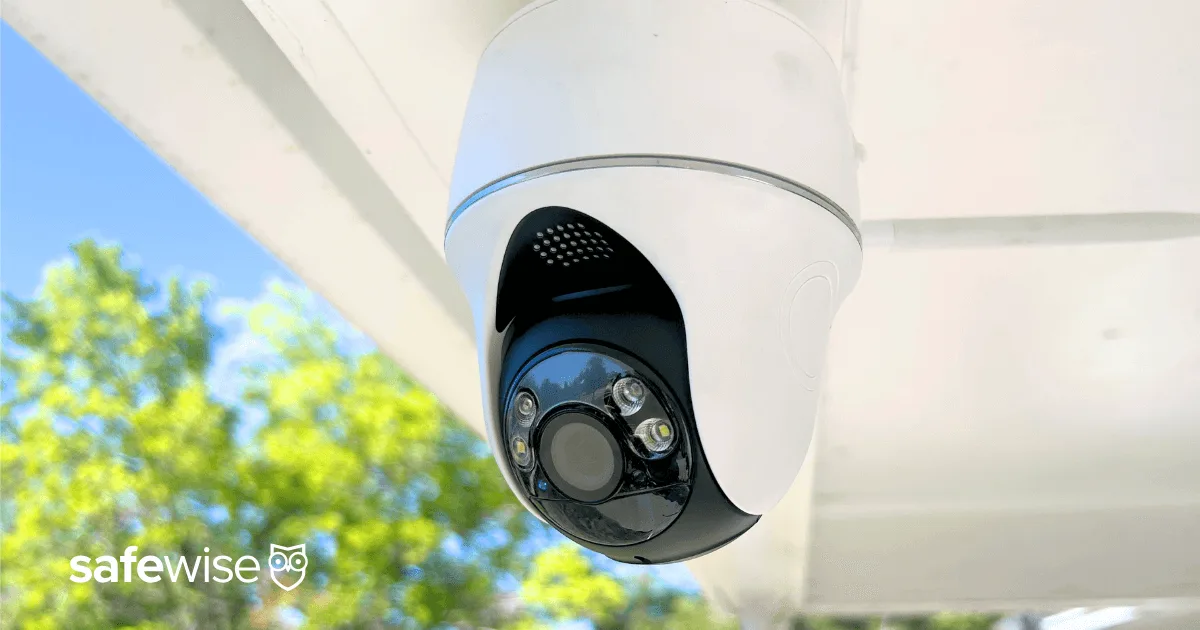
Image source: Web (Bing) / animalia-life.club (Web image (fair-use with source credit))
Quick Answer: The Core Idea Behind Outdoor Cameras
Outdoor security cameras capture video using lenses and image sensors. They process this data, often compressing it, and transmit it wirelessly via Wi-Fi or through cables to a storage device like an NVR or the cloud. Motion detection triggers recording, providing footage when activity occurs.
Understanding the Key Components: What's Inside the Eye?
Every outdoor security camera is a miniature surveillance hub, packed with specialized parts to do its job. The core function is to capture light, convert it into digital data, and send it where you can see it. These components work in concert to deliver everything from a crystal-clear daytime view to an eerie black-and-white image at midnight.
The Lens and Sensor: Capturing Light
The lens is the camera's eye, gathering light from the surrounding environment and focusing it. Think of it like the pupil of your own eye. Behind the lens sits the image sensor, which is a small chip covered in millions of tiny light-sensitive pixels.
When light hits these pixels, they convert it into an electrical signal. The quality of the lens and the density of pixels on the sensor directly impact the image resolution and detail you'll get.
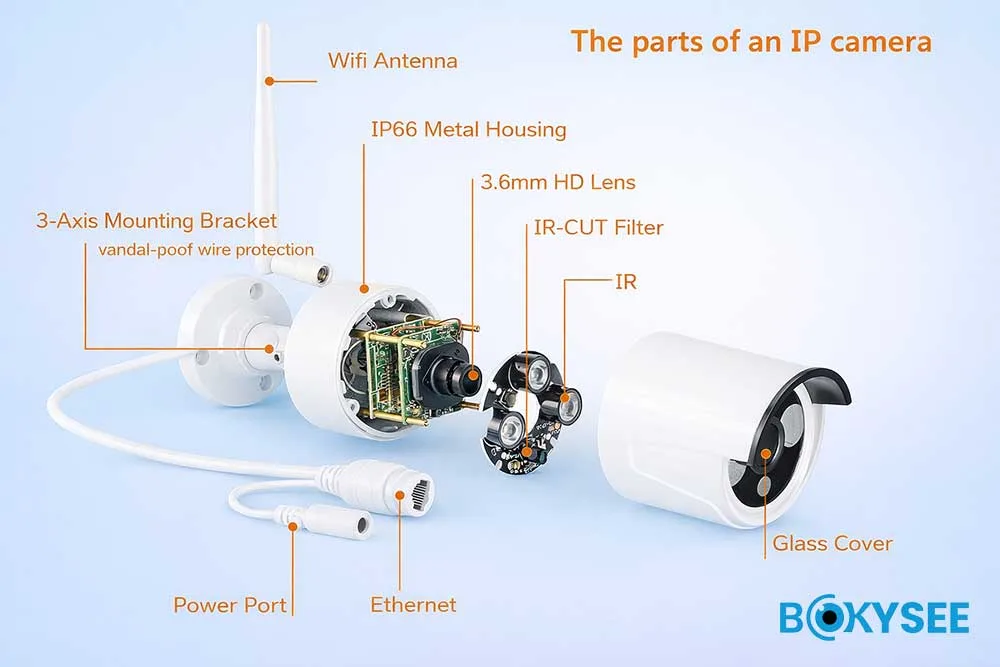
Image source: Web (Bing) / bokysee.com (Web image (fair-use with source credit))
The Processor: Turning Light into Data
This electrical signal from the image sensor is raw data. The camera's built-in processor takes this raw signal and converts it into a digital image or video stream. This is where things like color correction, sharpening, and, importantly, video compression happen.
Manufacturers like Ambarella produce specialized processors designed for high-performance video applications, including security cameras. Compression, often using codecs like H.264 or H.265, is vital for reducing file sizes without a massive loss in quality, making storage and transmission more efficient.
Night Vision Tech: Seeing in the Dark
When ambient light dips too low for the image sensor to capture a clear picture, infrared (IR) LEDs take over. These LEDs emit infrared light, which is invisible to the human eye but can be detected by the camera's sensor. This allows the camera to "see" in complete darkness, producing a monochrome (black and white) image.
The effective range of night vision varies significantly between models, with some capable of illuminating areas up to 100 feet.
How Cameras Connect and Send Your Footage
Once the camera has captured and processed the video, it needs a way to get that information to you or a recording device. This is typically done through a network connection, either wirelessly or via a physical cable. The choice of connectivity significantly impacts installation, reliability, and the types of features available.
Wi-Fi Cameras: Going Wireless
Wi-Fi security cameras connect to your home's wireless network, much like your smartphone or laptop. This offers great flexibility in placement, as you don't need to run cables through walls. You simply connect the camera to your Wi-Fi network using a smartphone app, and it starts streaming data.
The signal strength of your Wi-Fi network is critical here; a weak signal can lead to choppy video, dropped connections, or an inability to connect at all. For reliable performance, ensure your router provides a strong signal to the camera's intended location.
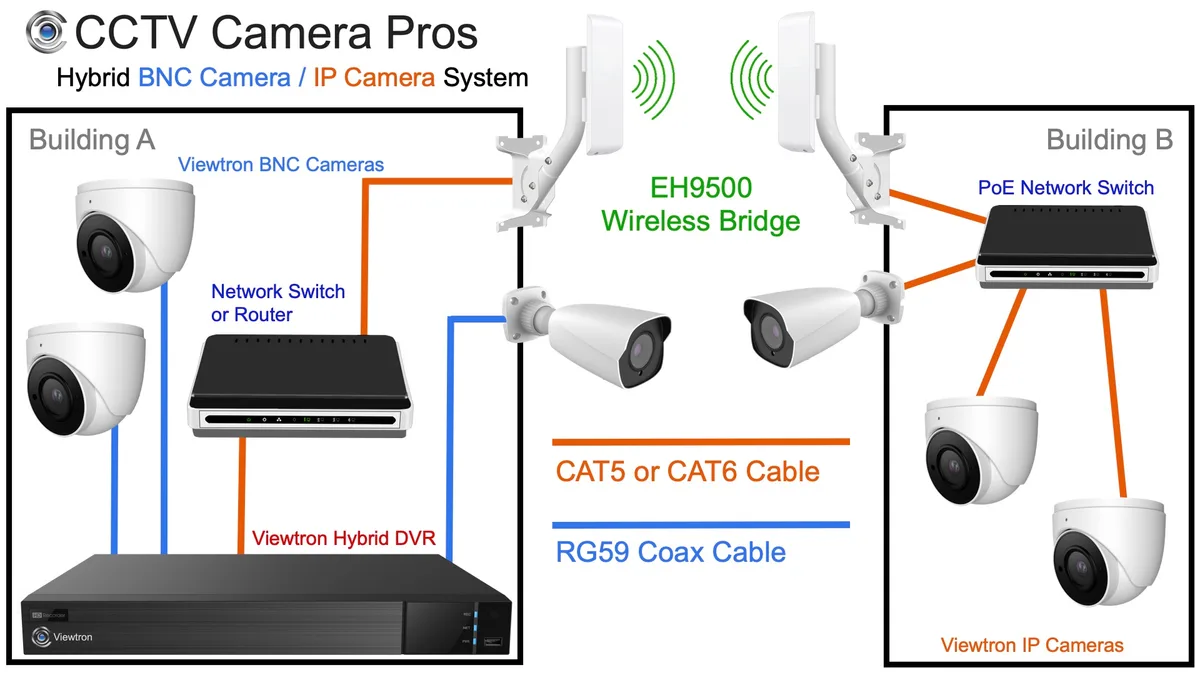
Image source: Web (Bing) / splen.co.uk (Web image (fair-use with source credit))
Wired Cameras: The Reliable Connection
Wired cameras, often using Ethernet cables, offer a more stable and secure connection. These cables transmit both data and, in many cases, power (known as Power over Ethernet or PoE). PoE simplifies installation by eliminating the need for a separate power outlet near the camera.
Wired connections are generally less susceptible to interference than Wi-Fi and can provide higher bandwidth, which is beneficial for higher resolution cameras or when transmitting video over longer distances. These cameras typically connect directly to a Network Video Recorder (NVR) or your home router.
Powering Your Cameras: Wired vs. Battery
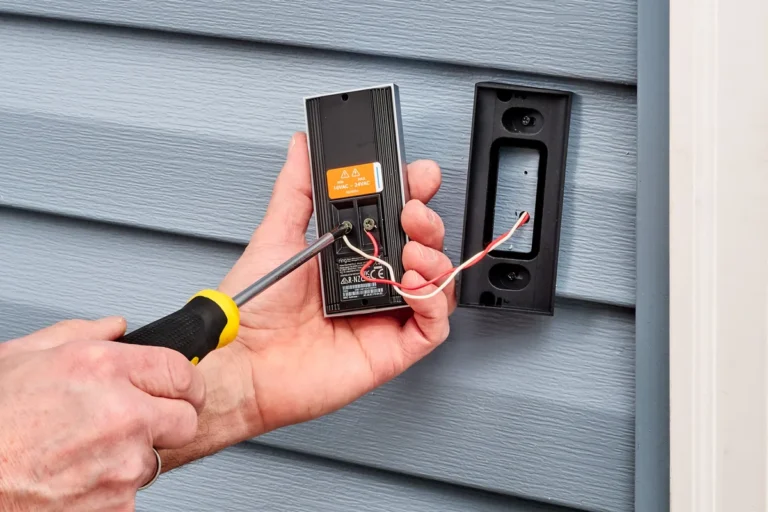
How a camera receives power is a fundamental aspect of its operation. Wired cameras will typically plug into a standard electrical outlet or utilize PoE from an NVR. Battery-powered cameras offer the ultimate in placement flexibility, as they don't require any wiring.
However, these batteries need periodic recharging or replacement, which can be a significant maintenance task, especially for multiple cameras. Battery life varies widely depending on usage, Wi-Fi signal strength, and temperature, with some lasting only a few weeks in active use.
Where Your Video Footage Goes: Storage Options
Capturing all that video data requires a place to store it. Security camera systems offer two primary storage solutions: cloud storage and local storage. Each has its own set of advantages and disadvantages that can influence your choice based on budget, convenience, and security needs.
Cloud Storage: Access Anywhere
Many Wi-Fi security cameras rely on cloud storage services. The video footage is uploaded over the internet to servers managed by the camera manufacturer or a third-party provider. This allows you to access your footage from any internet-connected device, anywhere in the world, through a dedicated app or web portal.
A common aspect of these services is a subscription fee, often tiered based on the number of cameras, storage duration (e.g., 7 days, 30 days), and features like advanced analytics. Manufacturer specifications often list cloud subscription plans starting around $3-$10 per camera per month.
Local Storage: Keeping it In-House
Local storage keeps your video recordings on-site, offering greater control and potentially avoiding monthly fees. This can take a few forms:
- MicroSD Cards: Many standalone cameras have a slot for a microSD card, allowing them to record directly onto the card. This is a simple, cost-effective solution for a single camera or as a backup. Storage capacity typically ranges from 32GB to 512GB, with higher capacities supporting longer recording times.
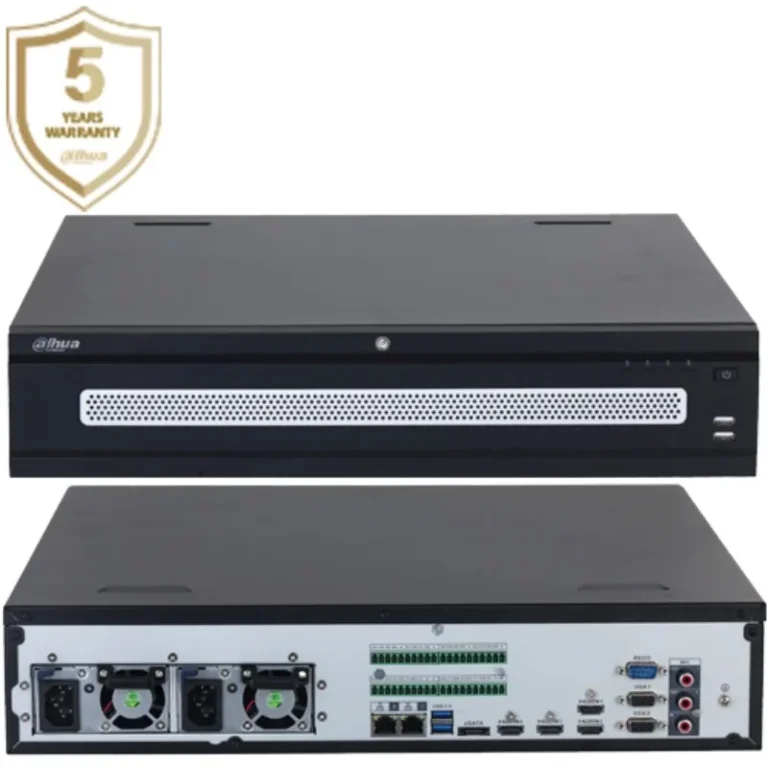
- Network Video Recorder (NVR) / Digital Video Recorder (DVR): These are dedicated hardware devices that connect to multiple cameras and store footage on their internal hard drives. NVRs are used with IP cameras, while DVRs are used with older analog systems. These systems offer significant storage capacity, often measured in terabytes (TB), and provide a centralized hub for managing all your camera feeds.
Smart Features: Motion Detection and Alerts
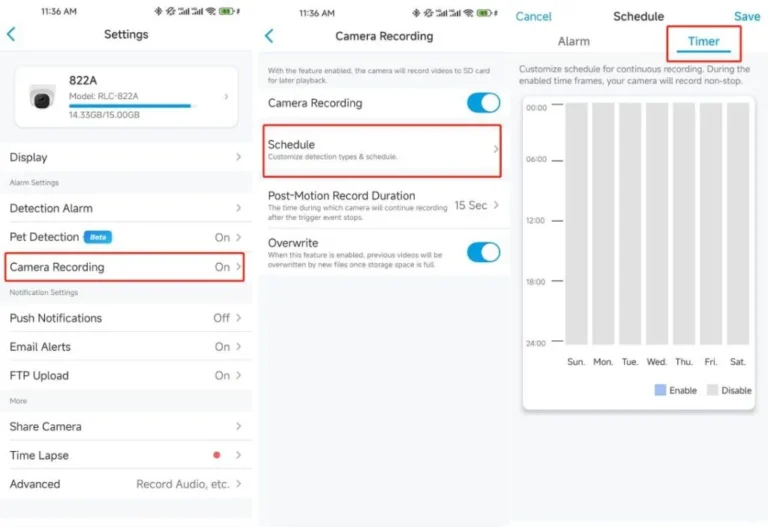
To make security cameras more efficient and user-friendly, most incorporate smart features, with motion detection being the most common. Instead of recording continuously, which would quickly fill up storage, cameras use motion detection to identify when something is happening in their field of view. When movement is detected, the camera can then trigger a recording, send an alert to your smartphone, or both.
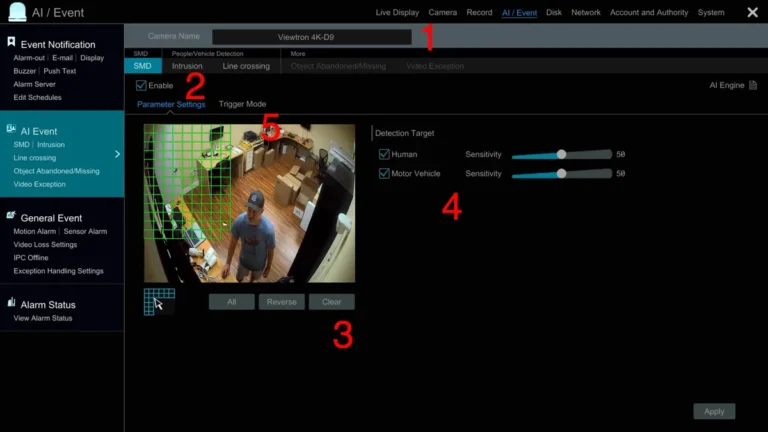
Advanced motion detection systems can differentiate between types of motion. For instance, some cameras can distinguish between a person, a pet, a vehicle, or even general environmental changes like waving branches. This helps reduce false alerts, ensuring you're notified only when something significant occurs.
The sensitivity of motion detection can often be adjusted through the camera's app or interface, allowing you to fine-tune it to your specific environment.
Common Problems and How to Handle Them
Even the most advanced security camera systems can run into snags. Understanding these common issues can save you a lot of frustration. A frequent problem is inconsistent Wi-Fi connectivity, leading to dropped feeds or delayed alerts.
This often stems from signal interference or the camera being placed too far from the router.
Another common pain point is false motion alerts. Waving tree branches, passing headlights, or even shadows can trigger notifications. Many modern cameras offer advanced motion detection zones and object recognition to minimize these false positives.
If your camera experiences frequent false alarms, check its sensitivity settings and try adjusting the detection zones to exclude busy areas like public sidewalks.
Costs / Pricing / Data / Specs
When looking at how outdoor security cameras work, understanding the financial side is crucial. The upfront cost can vary wildly, from under $50 for a basic battery-powered Wi-Fi camera to several hundred dollars for a high-resolution, professional-grade IP camera. Add to this potential costs for storage, like monthly cloud subscription fees which can range from $3 to $30 per camera per month depending on the provider and features.
Beyond the initial purchase and subscription, consider power consumption. While most cameras use minimal power, those with extensive night vision, two-way audio, and constant streaming can draw more. For PoE systems, the power budget of the NVR or PoE switch is a key specification.
For example, a single IP camera might require 5-15 watts of power, while a system with 8 cameras would need a PoE switch capable of supplying a total of 40-120 watts, plus overhead.
Expert Tips for Best Performance and Placement
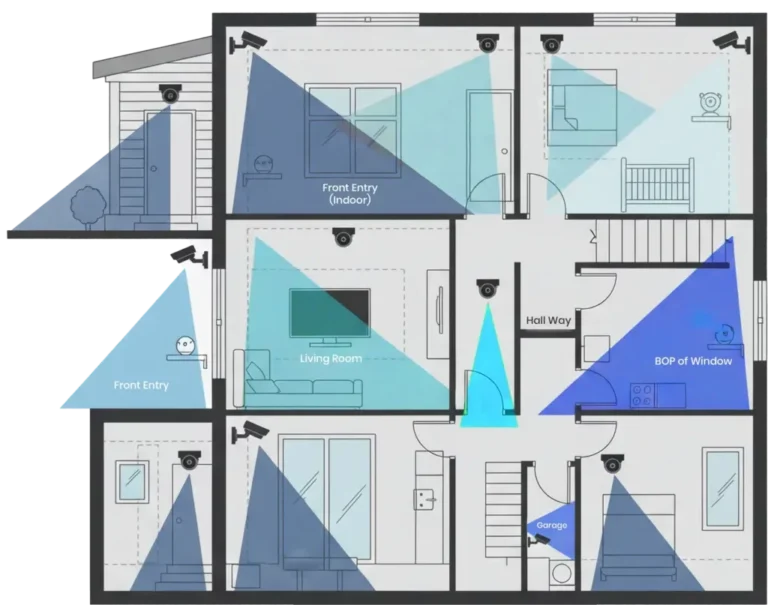
Getting the most out of your outdoor security cameras often comes down to smart placement and configuration. For instance, placing cameras at a height of around 8-10 feet from the ground can provide a good balance between capturing detailed facial features and deterring tampering. Avoid pointing cameras directly at bright light sources like the sun or strong streetlights, as this can wash out the image.
For Wi-Fi cameras, our research indicates that positioning them within 30-50 feet of the router is generally recommended for optimal signal strength, though this can vary based on building materials. If you experience dead zones, consider a Wi-Fi extender or a mesh network system. For wired systems, ensure cables are properly protected from the elements and run through conduit where necessary to prevent damage.
Frequently Asked Questions About Outdoor Cameras
What resolution is best for outdoor security cameras?
For clear, usable footage, our research indicates a minimum resolution of 1080p (Full HD) is recommended. Higher resolutions, such as 2K or 4K, offer even more detail, which can be crucial for identifying faces or license plates from a distance.
How often do battery-powered cameras need recharging?
This varies significantly. Some basic models may need charging every few weeks, while more advanced cameras with optimized power management might last several months on a single charge. Frequent motion detection events, poor Wi-Fi signal, and extreme temperatures can all reduce battery life.
Can I view my cameras on my phone when I'm away?
Yes, most modern outdoor security cameras are designed for remote viewing via a smartphone app. This requires the camera to be connected to your home's internet and for you to have a stable internet connection on your mobile device. Cloud-based services typically provide the most seamless remote access experience.
What's the difference between NVR and DVR systems?
NVR (Network Video Recorder) systems are used with IP cameras that connect over a network, often using Ethernet cables. DVR (Digital Video Recorder) systems are typically used with older analog cameras that connect via coaxial cables. NVR systems generally offer higher resolution and more advanced features.